Latest News
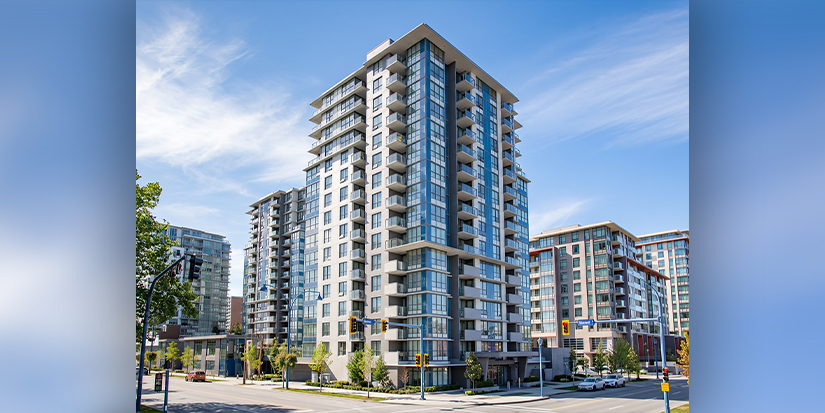
Richmond Housing Market Turns More Selective

Published 2:12 PDT, Wed May 6, 2026


-
A Market That Is Moving, but More Carefully
The Richmond housing market entered 2026 without the urgency that defined earlier cycles. Instead, the first quarter has been marked by a quieter kind of activity— one that is steady, but more selective.
Sales activity improved as the quarter progressed, with March showing a noticeable increase compared to January. Detached home sales reached 52 transactions for the month, representing a modest increase from the same period last year. Condominium and townhome segments remained relatively stable, though still below prior-year levels. Across Metro Vancouver, overall sales continue to track below long-term seasonal averages, even as month-to-month momentum improves. This points less to a lack of demand, and more to a change in how buyers are approaching the market.
Inventory Is Giving Buyers More Control
Inventory levels remained elevated through the first quarter. Richmond recorded 576 active detached listings, and 910 condominium listings in March, giving buyers significantly more choice than in previous years. With more options available, decisions are taking longer and comparisons are more deliberate. The sales-to-active listings ratio remains below the range typically associated with a balanced market, particularly in the detached segment. In practical terms, homes are still selling—but not automatically.
Prices Are Adjusting, but Stabilizing
Pricing trends reflect a similar sense of moderation. Benchmark values across Richmond have declined on a year-over- year basis, though the pace of change appears to be slowing.
As of March 2026, the benchmark price for a detached home was approximately $1.97 million, down 9.3 per cent from the previous year. Townhomes and condominiums showed comparable adjustments, with benchmark prices of $1.04 million and $674,700 respectively. However, over the most recent three-month period, price movement has been relatively limited. This suggests the market may be approaching a period of stabilization, rather than continuing a sharper correction.
Homes Are Taking Longer to Sell
One of the more visible changes is the time it takes for properties to sell. Average days on market have increased across all segments. Detached homes are now taking approximately 64 days to sell, com- pared to 38 days a year earlier. Townhomes and condominiums have experienced similar, though less pronounced increases. This does not necessarily signal weakening demand. Rather, it reflects a more cautious buyer, taking time to evaluate multiple options before making a decision.
A More Divided Market Is Emerging
The first quarter data also shows that Richmond is no longer behaving as a single, unified market. Entry-level condominiums continue to benefit from relative affordability, while higher-priced detached homes face greater resistance. Even within the same category, outcomes can vary depending on location, condition, and pricing. With more supply available, buyers are no longer just asking whether a property is fairly priced. Increasingly, they are comparing it directly to the next available option—and making decisions accordingly.
What This Means for Buyers and Sellers
The first quarter of 2026 does not point to a declining market, but rather one that is adjusting. Homes are still selling, but not as quickly. Prices are moving, but not sharply. Buyers remain active, but more deliberate. For sellers, this places greater emphasis on pricing accuracy and presentation. For buyers, it creates more opportunity to compare and negotiate, particularly in segments where inventory remains elevated. More broadly, Richmond’s housing market is shifting away from a momentum-driven cycle toward one shaped by alignment—between expectations, pricing, and value.
























































































































































































2 Hours of free financial consulting
Jai Xin Planning Ltd.
C$120.00 C$0.00

Use any of our home staging service and get a second month rental for free!
MiiX Interiors
C$500.00 C$0.00

Get 10% off any order
Phantom Screens Lower Mainland
C$200.00 C$180.00