Latest News
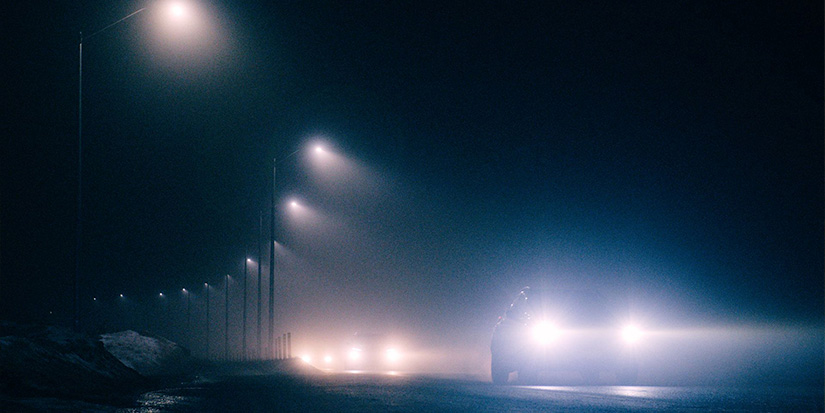
Photo courtesy Jaykumar Bherwani
You’re Not Crazy—Headlights Have Gotten Brighter

Published 3:20 PDT, Tue August 4, 2026
Last Updated: 3:34 PDT, Tue August 11, 2026


-
You’re Not Crazy—Headlights Have Gotten Brighter
If you’ve ever thought that car headlights have
become too bright, you’re not alone. The implementation and adoption of LED bulbs have resulted in glaring lights that pose genuine
road safety concerns, drawing increased attention from commuters and regulators alike.
Car manufacturers embraced this shift so quickly because LEDs offered practical advantages like energy efficiency, longer lifespan, and more flexible designs. However, they may have failed to consider the perceptual differences between the two. From a technical perspective, LEDs and halogen bulbs can measure the same bright- ness on paper, but be perceived differently by drivers due to the colour of the light they produce. LEDs aren’t inherently problematic when installed and aimed correctly. The problem arises when installation standards aren’t met.
For example, drivers swapping their factory halogen bulbs for aftermarket LED replacements, often do so without adjusting the angle of the headlight housing. Because the two types of bulbs emit light differently, headlight housings designed for halogen bulbs will not distribute LED light the same way, resulting in a headlight that is both brighter and more poorly aimed. In British Columbia, it’s generally illegal to install LEDs in headlight housings not designed to accommodate them. Despite this, enforcement is inconsistent, and thus misaligned aftermarket headlights remain common on BC roads.
The growing dominance of SUVs and pickup trucks has introduced a separate but related is- sue: headlight mounting height. Larger vehicles mount their headlights significantly higher off the ground than passenger cars, which means that when a truck sits behind a sedan at a stop- light or follows one on a highway, its low beams are aimed directly into the sedan's mirrors and the driver's eyes. What the truck driver experiences as a normal low beam becomes effective- ly a high beam for the car in front of them.
These problems pose real safety concerns like temporary visual impairment when a driver’s eyes are hit with a sudden burst of intense light, causing the pupils to contract rapidly. Another concern is shoulder checking while being followed by a vehicle with overly bright headlights, making it nearly impossible to determine whether the adjacent lane is clear and safe to merge into. There are also the potential risks associated with long-term or repeated exposure to intense glare, which has been linked to eye strain and discomfort, though research on permanent eye damage from headlight exposure is still developing.
So if LED headlights are so problematic, why are they still allowed on roads? In Canada, headlight regulations are governed by the Can- ada Motor Vehicle Safety Standard 108 (CM- VSS 108), which incorporates Technical Standards Document 108 — a set of requirements for lamps, reflective devices, and associated equipment on all vehicles sold in Canada. Notably, TSD 108 is modelled directly on the equivalent American standard published by the US National Highway Traffic Safety Administration. The issue with this regulatory framework is that it hasn’t kept pace with how headlight technology has evolved. The standard measures brightness in candelas, which is a unit of light intensity, but candela measurements do not account for colour temperature or the concentrated nature of LED bulbs. An LED headlight can technically fall within the legal brightness limits while still appearing significantly more intense to oncoming drivers than a halogen headlight with an identical candela rating. This metric is arguably no longer an accurate reflection of real-world experiences.
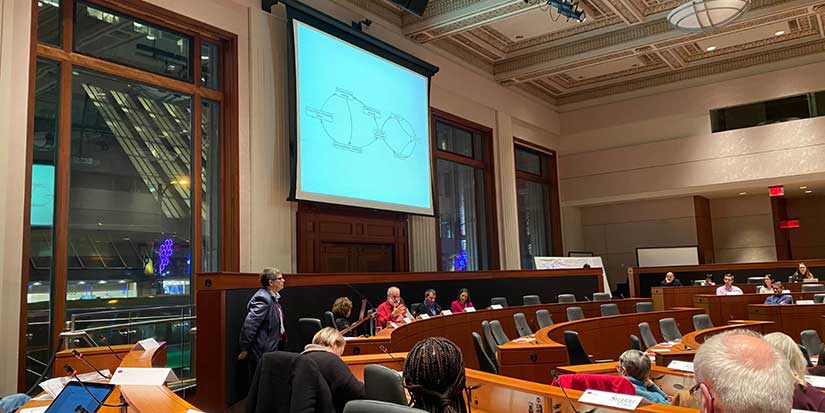
That being said, there are signs that the issue of headlight brightness is gaining regulatory attention. Vancouver City Council recently passed a unanimous motion calling on the federal government to establish clearer and more enforceable limits on headlight brightness, beam patterns, and mounting heights. Sever- al other BC municipalities have made similar calls. A petition was filed in the House of Com- mons by a Gatineau resident citing extreme glare from vehicles, and Transport Canada has since launched a nationwide survey gathering data from Canadians on their thoughts on the current state of headlights and what safety impacts they have experienced. Survey questions asked about experience travelling at night, contributing factors to headlight glare, driver behaviour, and feedback on solutions.
Unfortunately, there is currently no single fix, but several approaches are being discussed. Better regulation and enforcement is the most direct path. If LED headlights are the future, then the standards governing their installation, aim, and light distribution need to reflect that reality. Updating CMVSS 108 to account for the perceptual differences between LED and halogen bulbs, and strengthening provincial enforcement around aftermarket modifications, would address the problem at its source. On the technology side, adaptive matrix headlights represent a promising development. These systems use cameras to detect oncoming vehicles and selectively dim portions of the beam to avoid shining directly into other drivers' eyes, while keeping the rest of the road fully illuminated. They are already available on some high- er-end vehicles sold in Canada, but widespread adoption is still potentially years away.
While waiting for regulatory or technological solutions, there are a few practical steps drivers can take. Adjusting your rearview mirror to its night setting can reduce the impact of bright headlights from behind. If you own a vehicle with aftermarket headlights or suspect your headlights may be misaligned, having them properly aimed by a mechanic is a relatively in- expensive fix that can meaningfully reduce the impact on other drivers.
Updating regulations can be slow, and the time-
line for meaningful updates to Canada's head-
light standards remains unclear. But the conversation is happening. The growing number
of public complaints, combined with mounting
evidence of real safety concerns, makes the cur-
rent standards increasingly difficult to defend.


































































































































































2 Hours of free financial consulting
Jai Xin Planning Ltd.
C$120.00 C$0.00

Use any of our home staging service and get a second month rental for free!
MiiX Interiors
C$500.00 C$0.00

Get 10% off any order
Phantom Screens Lower Mainland
C$200.00 C$180.00